
X-Rays in Plymouth
On-site digital X-rays in Plymouth, MN — ordered when clinically needed, with low-dose modern equipment and a clear explanation of your findings.
Plymouth Spine and Health Center
X-Rays in Plymouth
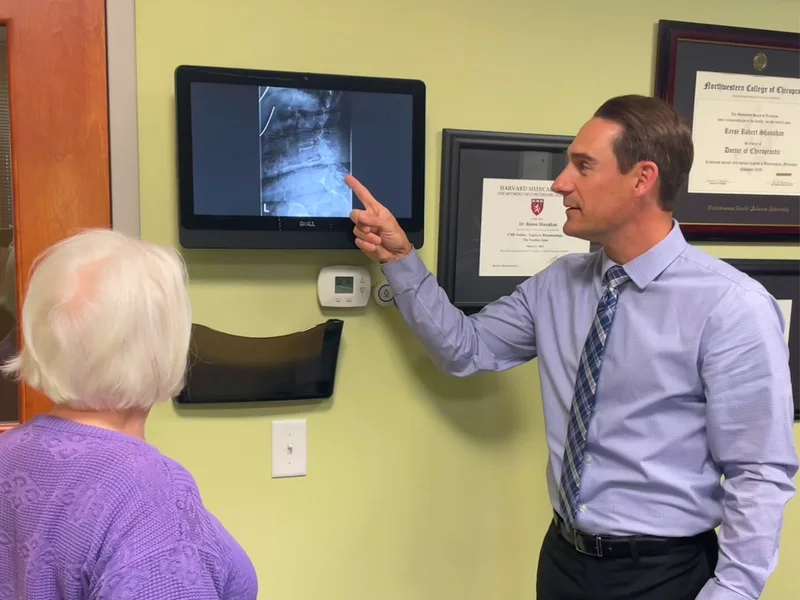
When imaging is needed, we can take it right here in our Plymouth office — no trip to a separate facility, no waiting days for results. Dr. Reese Shanahan uses modern digital X-ray equipment to capture clear, low-dose images of your spine, then walks you through exactly what he sees with clear explanations.
How it works
What to expect with x-rays
- Step 1
Clinical screening first
Before any imaging is ordered, Dr. Shanahan reviews your history and performs a thorough orthopedic and neurological exam to determine whether X-rays will change your care — so we never image as a formality.
- Step 2
On-site digital imaging
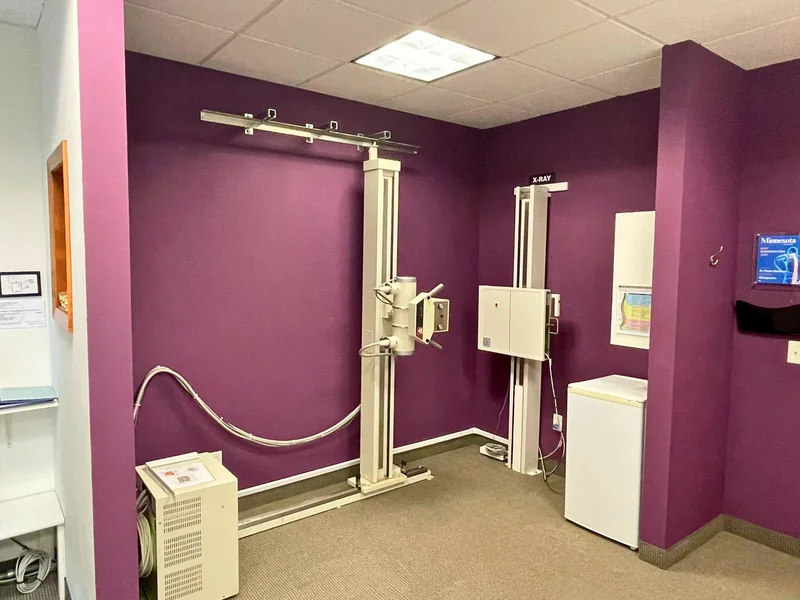
If X-rays are warranted, they're taken here in our Plymouth office with modern digital equipment that delivers clear images at low exposure levels — no separate facility, no waiting days for results.
- Step 3
Review of findings
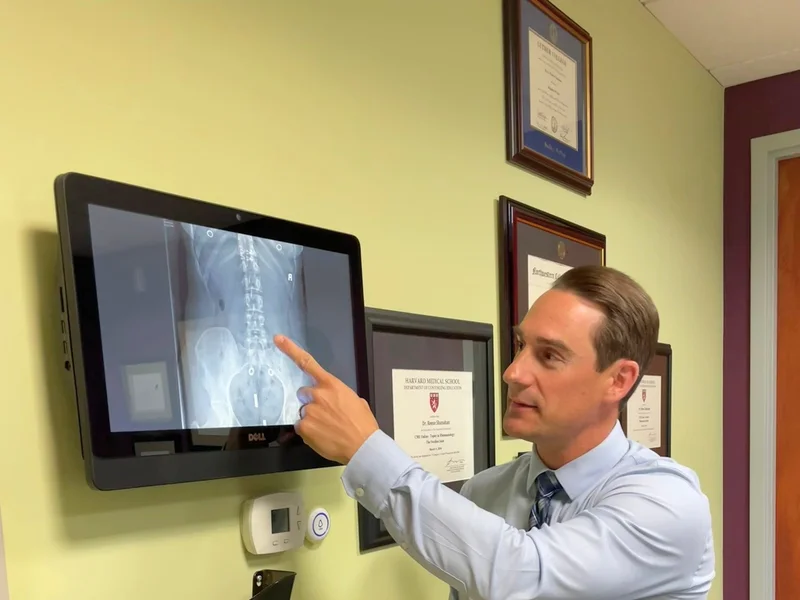
Dr. Shanahan reviews your images with you, explains exactly what he sees, how it affects your care plan and what comes next — so you leave with real answers, not just a printout.
Why patients choose it
Benefits of x-rays
On-site — no referral to a separate imaging center
Images reviewed with you in person.
Modern digital equipment with low radiation exposure
Ordered when clinically needed to help your care
Informs precise, personalized adjustments and care planning
Identifies red flags that would change your treatment or require a referral
The basics
About x-rays
X-rays show the bones and joint spaces of your spine clearly, making them the right tool when red flags, a history of trauma, or a complex structural picture could change your care plan. They can reveal fractures, significant degenerative changes, spinal curvatures like scoliosis, and alignment issues that a hands-on exam alone can't fully characterize. That additional information lets Dr. Shanahan calibrate adjustments precisely — the right technique, the right force, the right direction — rather than working blind.
What X-rays cannot show is equally important to understand. Soft tissue — discs, nerves, and muscles — doesn't appear on standard X-ray. When those structures are the likely culprit, we say so and refer for MRI or advanced imaging rather than ordering X-rays you don't need. Modern digital equipment keeps radiation exposure well below diagnostic thresholds, and we never image as a routine formality — only when the result will meaningfully shape your care.
New Patient Special
$47
Consultation and exam, with any needed X-rays.
* This special is for NEW patients only. This special does not apply to federal beneficiaries.
What are on-site X-rays?
Digital X-ray is a standard diagnostic imaging tool that produces clear images of the bones and joint spaces of your spine using a small, controlled dose of radiation. When those images are available in our Plymouth office — rather than at a separate facility — Dr. Shanahan can review them with you the same visit and incorporate what he finds directly into your care plan.
Modern digital X-ray equipment produces significantly less radiation than older film-based systems and delivers faster, sharper images. We follow ALARA principles — keeping exposure As Low As Reasonably Achievable. The result is a safe, low-exposure look at spinal structure that takes only a few minutes to capture.
What to expect
X-rays at our office are straightforward. You’ll be positioned standing while a digital sensor captures one or more images of the area in question. Each exposure takes only a second, and the entire imaging is usually complete in five to ten minutes.
The real value comes in what happens next. Dr. Shanahan is able to review your images immediately, pointing out what he sees — whether that’s a fracture, degenerative joint changes, a curve in your spine, or reassuring normal findings — and explaining how each piece affects your care. You leave with a clear picture of what’s going on and how it factors into your care.
If your images reveal something that calls for more advanced imaging — like an MRI to see discs or nerves — or a specialist referral, Dr. Shanahan will tell you directly and help coordinate that next step.
Who it helps
X-rays are clinically useful when imaging will genuinely change the course of your care. Dr. Shanahan typically orders them for patients with:
- Back pain or neck pain following a significant fall, accident, or trauma
- Suspected or known scoliosis that needs measurement for monitoring or care planning
- Disc injury with structural features that would influence adjustment technique
- Red flags on exam — such as unexplained weight loss, fever, or progressive neurological changes — that require imaging before proceeding
- Complex or long-standing spinal issues where the bony architecture shapes the safest and most effective approach
For patients whose symptoms point to soft-tissue involvement — a herniated disc pressing on a nerve, for example — Dr. Shanahan will explain when MRI is the more appropriate tool and refer accordingly.
Why choose Plymouth Spine and Health Center
Patients across Plymouth, Maple Grove, Minnetonka, Wayzata, and Medina choose us because they get straight answers. When X-rays are the right tool, they’re done in-office and findings explained clearly — no separate facility, no waiting, no guesswork. When imaging isn’t warranted, we’ll tell you that too.
Dr. Reese Shanahan uses every diagnostic tool — including on-site digital X-ray — to build a care plan that’s precise, honest, and specific to you. Ready to get to the bottom of what’s going on? Our New Patient Special makes your first visit easy, and you can book an appointment online in under a minute.
What it helps
Conditions we may take x-rays
What are X-rays used for in chiropractic care?+
X-rays let Dr. Shanahan see the bones and joint spaces of your spine clearly — identifying fractures, significant arthritis, scoliosis, alignment issues, or structural changes that a hands-on exam alone can't fully characterize. That information helps him calibrate your care plan and rule out conditions that would require a different approach or a specialist referral.
Does everyone who comes in need X-rays?+
No, not everyone needs x-rays. Dr. Shanahan orders X-rays only when it is needed to help determine what care is best for you and rule out any contraindications to care.
Are chiropractic X-rays safe?+
Yes. Modern digital X-ray equipment produces significantly less radiation than older film-based systems and keeps exposure well below established diagnostic safety thresholds. We also follow ALARA principles — keeping exposure As Low As Reasonably Achievable — and we never image when it isn't clinically necessary.
Will the X-rays hurt?+
Not at all. You'll stand or lie in a specific position for a few seconds while the image is captured. There's no physical sensation, no needles, and no discomfort during the process.
How soon will I see my results?+
Digital images are available almost immediately. Dr. Shanahan can typically review them with you by the next day — showing you what he finds and how it affects your care plan — so you leave with real answers and a great plan of care.
Can X-rays show a herniated disc or pinched nerve?+
Standard X-rays show bone and joint structure but not soft tissue. They can reveal indirect signs — like reduced disc height — that suggest a disc problem, but to see the disc or nerve directly you need an MRI. If Dr. Shanahan suspects soft-tissue involvement is the primary driver of your pain, he'll tell you and refer for the right imaging.
Do I need to prepare anything before getting X-rays?+
Very little preparation is needed. You may be asked to remove metal jewelry or accessories from the area being imaged. Wear comfortable clothing you can move in. Let us know beforehand if there's any chance you might be pregnant so we can take appropriate precautions.
Will my insurance cover X-rays?+
Many plans cover diagnostic imaging when it's medically indicated. We verify your benefits before your visit and walk you through what's covered. Affordable self-pay rates are available for patients without imaging coverage.
Can X-rays detect scoliosis?+
Yes — X-ray is the standard method for measuring spinal curvature in scoliosis. A standing full-spine image lets Dr. Shanahan measure the Cobb angle and assess whether the curve warrants monitoring, bracing, or a specialist referral, and helps him adjust your care accordingly.
What happens after my X-rays are reviewed?+
Dr. Shanahan walks you through the findings, explains how they shape your care plan, and answers your questions. If imaging reveals something that needs a specialist or more advanced imaging, he'll tell you plainly and help coordinate that next step.
Explore more
Related services
Patient reviews
What our Plymouth patients say
“I've been seeing Dr. Shanahan for several years now across several different minor to more aggravating issues. All around great experience. He's effective and very efficient. And I also appreciate that I'm not constantly trying to be upsold more/different services or supplements, etc.”
“Easy scheduling!”
“Wonderful”